

savvy4422
New member
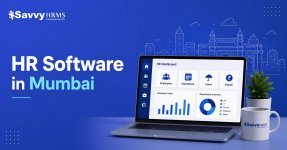
Managing people effectively has become one of the most important factors in determining business success. While organizations invest heavily in sales, marketing, and operations, Human Resources remains the backbone that supports workforce productivity and organizational growth. As businesses in Mumbai continue to expand and adapt to changing workplace dynamics, the need for efficient HR management has never been greater.
From hiring and onboarding to payroll processing and employee engagement, HR teams handle numerous responsibilities every day. Managing these functions manually can slow down operations, increase errors, and limit productivity. This is why organizations are increasingly adopting the HR software in Mumbai to streamline workforce management and create a more efficient workplace.
Modern HR software enables businesses to automate repetitive tasks, centralize employee data, and improve overall workforce visibility. As a result, organizations can focus on strategic growth while ensuring employees receive a seamless HR experience.
Understanding the Challenges of Traditional HR Management
Many organizations still rely on spreadsheets, paperwork, and disconnected systems to manage HR operations. While these methods may seem manageable initially, they often create challenges as businesses grow.Common issues associated with manual HR processes include:
- Data entry errors
- Time-consuming administrative work
- Delayed approvals
- Payroll inaccuracies
- Compliance risks
- Difficulty tracking employee performance
- Limited workforce insights
How HR Software Supports Business Growth
Business growth requires scalable systems that can handle increasing operational complexity. HR software provides a centralized platform that simplifies workforce management while reducing administrative workloads.Organizations can use HR software to manage:
- Employee records
- Payroll administration
- Attendance monitoring
- Leave management
- Recruitment processes
- Performance evaluations
- Compliance requirements
Centralized Workforce Management
One of the most significant benefits of HR software is the ability to centralize workforce information. Instead of storing data across multiple systems, businesses can maintain a single source of truth for employee records.This improves accessibility, reduces duplication, and ensures that information remains accurate and up to date.
Faster Administrative Processes
Administrative delays often impact productivity. HR software automates routine workflows such as leave approvals, attendance tracking, and document management.As a result, employees receive faster responses while HR teams spend less time on repetitive tasks.
Improved Decision-Making
Access to accurate workforce data helps leaders make informed decisions. Modern HR platforms provide real-time reporting and analytics that allow organizations to identify trends and evaluate workforce performance effectively.Enhancing the Employee Experience
Employee experience has become a key priority for businesses across industries. Organizations that create positive workplace experiences often benefit from higher engagement, improved productivity, and stronger retention rates.HR software contributes to employee satisfaction by simplifying interactions with HR departments.
Self-Service Capabilities
Employees no longer want to wait for HR assistance to access basic information. Self-service portals allow employees to:- Download payslips
- View attendance records
- Apply for leave
- Update personal details
- Access company documents
Transparent Processes
Transparency builds trust within organizations. HR software provides employees with visibility into leave balances, attendance records, approval statuses, and performance goals.This reduces confusion and creates a more positive employee experience.
Recruitment and Talent Acquisition Made Simpler
Hiring the right talent is crucial for organizational success. However, recruitment often involves multiple stages and significant administrative effort.Modern HR software streamlines recruitment by automating key activities.
Candidate Tracking
Recruiters can monitor applicants throughout the hiring process from a centralized dashboard.Interview Scheduling
Automated scheduling tools reduce coordination challenges and improve communication between recruiters and candidates.Onboarding Automation
Once candidates are hired, onboarding workflows help ensure a smooth transition into the organization.These features help businesses hire more efficiently while delivering a better candidate experience.
Strengthening Attendance and Leave Management
Attendance management remains one of the most important HR responsibilities. Accurate attendance records are essential for payroll processing, workforce planning, and compliance.HR software provides advanced attendance management capabilities such as:
- Biometric integration
- Mobile attendance tracking
- GPS-enabled attendance monitoring
- Shift scheduling
- Overtime management
Organizations using the <a href="https://savvyhrms.com/hr-software-in-Mumbai/">top HR software in Mumbai</a> can manage attendance and leave processes more effectively while reducing manual effort.
Improving Payroll Accuracy
Payroll errors can negatively impact employee morale and organizational credibility. Processing payroll manually often requires extensive calculations and verification.HR software automates payroll functions including:
- Salary calculations
- Tax deductions
- Incentive management
- Reimbursements
- Overtime payments
- Compliance reporting
Supporting Compliance Requirements
Compliance management is a critical aspect of HR operations. Businesses must maintain accurate records and adhere to various labor regulations.HR software helps organizations stay compliant by:
- Maintaining digital records
- Tracking policy acknowledgments
- Generating statutory reports
- Creating audit trails
- Automating compliance calculations
The Value of Workforce Analytics
Data-driven decision-making is becoming increasingly important in modern business environments. HR software provides access to workforce analytics that support strategic planning.Organizations can monitor metrics such as:
- Employee turnover rates
- Attendance trends
- Recruitment performance
- Productivity indicators
- Training effectiveness
Predictive Workforce Planning
Advanced analytics can help businesses forecast future workforce needs and address potential challenges before they arise.This proactive approach supports long-term organizational growth.
Preparing for the Future Workplace
The future of work will continue to evolve as technology advances and employee expectations change. Organizations need flexible systems capable of supporting remote work, hybrid teams, and growing workforce demands.Cloud-based HR software offers scalability, accessibility, and real-time data access that enable businesses to adapt to changing workplace requirements.
Companies that embrace digital HR transformation are better positioned to remain competitive in a rapidly changing business environment.
Conclusion
Effective workforce management is essential for achieving sustainable business growth. Manual HR processes can create inefficiencies, increase administrative burdens, and limit organizational agility.By implementing the <a href="https://savvyhrms.com/hr-software-in-Mumbai/">top HR software in Mumbai</a>, businesses can automate critical HR functions, improve employee experiences, strengthen compliance, and make smarter workforce decisions. As organizations continue to grow and evolve, modern HR software will remain a valuable investment for building efficient, productive, and future-ready workplaces.