

david_smith1
New member
Regulatory Radar: How CoinMinutes Monitors Global Policy Shifts Before They Impact Markets
Regulatory shifts pose the biggest surprise risk in crypto markets. Unlike technical analysis or fundamental valuations, policy changes often appear suddenly to the unprepared. Yet these shifts rarely come without warning signs. Regulatory monitoring tracks policy developments across multiple jurisdictions, analyzing language patterns in official communications, committee discussions, and enforcement actions to spot directional shifts before they trigger market moves.For most investors and businesses, regulatory surprises have meant losses, compliance emergencies, and sleepless nights. The stress of working in an environment where rules can change overnight takes a psychological toll that goes beyond financial impact.
The High Stakes of Regulatory Blindness
Regulatory announcements trigger some of the most dramatic price swings in cryptocurrency markets. Looking at data from 2023-2024, five major regulatory announcements caused immediate market drops ranging from 8% to 31%, with Bitcoin alone losing $112 billion in market cap during a 48-hour period following unexpected guidance from the Financial Action Task Force..jpg "The high stakes of regulatory blindness")
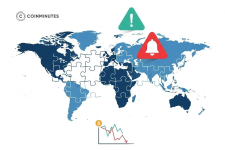
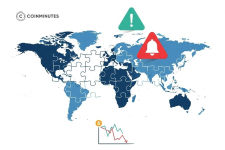
Global news impacting the crypto markets
The challenge comes from the fragmented global landscape. At least 27 key jurisdictions have their own regulatory frameworks for digital assets, each with multiple regulatory bodies that rarely coordinate announcements. This creates a monitoring nightmare for market participants.
Recovery times after regulatory shocks vary based on the nature of the announcement. Data shows restrictive policy announcements cause average market drops of 22% with recovery periods of 38-72 days, while enabling regulations typically produce positive movements within 48 hours.
This creates an edge for the prepared. Those who detect regulatory shifts early can protect capital during negative developments and position aggressively ahead of positive ones. While most market participants react to news headlines, informed actors make calculated moves based on regulatory signals spotted weeks earlier.
Visit This Site: https://band.us/@coinminutes
The Regulatory Monitoring Process
Effective regulatory intelligence relies on five key components that work together to transform raw regulatory information into actionable insights.First, multi-source verification tracks primary documents from regulatory bodies, parliamentary committees, and financial authorities across key markets. This cuts out potentially inaccurate news reports and reduces delay.
Second, natural language processing scans regulatory documents to identify pattern shifts, comparing current language with historical contexts. This catches subtle changes in regulatory tone that human analysts might miss when reviewing thousands of pages.
Third, signal filtering separates meaningful developments from routine communications, while human expertise validates the findings against market realities. This balance prevents both false alarms and missed signals.
Fourth, contextual analysis evaluates regulatory developments against existing policies, cultural factors, and historical enforcement patterns specific to each jurisdiction.
Finally, impact assessment connects policy shifts to specific asset classes, business models, and compliance requirements.
Integration Frameworks for Different Market Participants
Different market participants need tailored approaches to regulatory intelligence integration. Individual investors need portfolio protection protocols that establish response thresholds for regulatory signals, including diversification across regulatory jurisdictions and position sizing tied to regulatory risk assessments..jpg "Integration frameworks for different market participants")
How regulations impact crypto players
Businesses benefit from compliance roadmaps that map potential regulatory scenarios against operational requirements, establishing preparation triggers for documentation, technical changes, and procedural updates.
Traders need position adjustment tactics focused on near-term market reactions, including volatility management tools and correlation analysis between regulatory news and specific asset classes.
These frameworks must address different signal types. Early signals warrant monitoring and preparation but rarely justify major position changes. Confirmed developments demand immediate action proportional to implementation timelines. Restrictive regulatory changes typically require risk reduction, while enabling regulations may present expansion opportunities.
National regulatory changes affect domestic entities first, but international coordination signals (like FATF guidelines) often indicate broader adoption patterns across multiple jurisdictions.
Knowing when to act versus when to wait for confirmation is a critical decision point. Generally, signals from primary regulatory authorities with enforcement power justify earlier action than signals from advisory bodies or industry groups. However, the latter often provide the earliest indicators of direction.
Evolving Landscape of Regulatory Monitoring
At Coinminutes, we observe that regulatory technology continues to advance, with several emerging trends reshaping monitoring capabilities. AI-enhanced signal detection now processes regulatory language with greater contextual understanding, identifying meaningful patterns across thousands of documents. Cross-jurisdictional pattern recognition tracks how regulatory approaches spread between regions, helping predict which jurisdictions might adopt similar frameworks.Predictive models have begun mapping the typical lifecycle of digital asset regulation across jurisdictions, from initial discussion to enforcement. Semantic analysis moves beyond literal language to assess the underlying objectives of regulatory bodies, providing deeper insight into potential future directions.
The regulatory environment grows increasingly complex as more jurisdictions develop specialized frameworks for digital assets. While current systems effectively monitor formal channels, emerging regulatory approaches may require new methodologies. Regulatory sandboxes, principles-based frameworks, and adaptive regulation models present particular challenges for traditional monitoring approaches.
Even the most advanced monitoring systems face limitations. Regulatory intent remains partially hidden, and the interaction between multiple regulatory objectives can produce unexpected outcomes. Political shifts can rapidly change regulatory priorities, and international coordination efforts may break down during implementation.
The human element remains irreplaceable in regulatory monitoring. While technology excels at data processing, experienced analysts provide critical context about regulatory cultures, institutional relationships, and historical patterns that algorithms cannot fully capture.
See Page: The Technical Indicators CoinMinutes Analysts Actually Use
Attachments

Last edited: