
shauryachavan
New member
Red Teaming has become an important approach for organizations that want a realistic view of their security posture. Instead of focusing only on isolated vulnerabilities, Red Teaming simulates real attacker behavior across systems, networks, and people to test how defenses perform under real-world conditions.
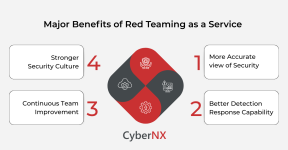
One of the key benefits of Red Teaming is its ability to reveal gaps that traditional assessments often miss—such as detection blind spots, response delays, and process-level weaknesses. When executed with a clear objective, it also helps security teams improve coordination, validate incident response workflows, and strengthen overall resilience.
Providers like CyberNX follow an adversary-driven Red Teaming methodology that aligns testing with actual business risks. Their approach emphasizes realistic attack scenarios, clear reporting, and practical remediation insights, helping organizations continuously improve rather than just fix isolated findings.
It would be interesting to hear from others:
One of the key benefits of Red Teaming is its ability to reveal gaps that traditional assessments often miss—such as detection blind spots, response delays, and process-level weaknesses. When executed with a clear objective, it also helps security teams improve coordination, validate incident response workflows, and strengthen overall resilience.
Providers like CyberNX follow an adversary-driven Red Teaming methodology that aligns testing with actual business risks. Their approach emphasizes realistic attack scenarios, clear reporting, and practical remediation insights, helping organizations continuously improve rather than just fix isolated findings.
It would be interesting to hear from others:
- What challenges have you faced while implementing Red Teaming?
- How do you measure the success of a Red Team exercise?
- Do you see more value in periodic testing or continuous Red Teaming?