
softfix
Member
The internet has changed dramatically since the day it first became public. What began as a collection of basic web pages has grown into a global space filled with apps, videos, social platforms and now even decentralized digital experiences. To understand this transformation, it helps to look closely at the three major phases of the web: Web 1.0, Web 2.0 and Web 3.0.
Web 1.0 – The Early, Static Internet
Web 1.0 refers to the earliest stage of the web, mostly active during the 1990s.Websites in this era were very simple. They didn’t do much except display text and a few images. Visitors could only read what was posted—nothing more.
Main traits of Web 1.0
- One-way communication
- No user input or interaction
- Pages built mostly with basic HTML
- Content was rarely updated
Web 2.0 – The Interactive, Social Web
Web 2.0 is the version of the internet we use today.This phase made the web more active and engaging. Users could now share their ideas, post content, and interact with each other.
What Web 2.0 introduced
- Social media platforms
- User-generated content
- Interactive websites and apps
- Cloud-based services
Web 3.0 – The Intelligent and Decentralized Web
Web 3.0 is the next step forward.It aims to build a web that focuses on user control, privacy, decentralization, and smarter technology.
Key aspects of Web 3.0
- Blockchain-based identity and data storage
- Decentralized applications (DApps)
- AI-driven personalization
- Greater security and transparency
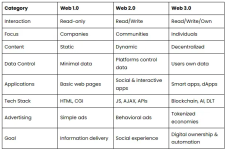
Web 1.0 vs. Web 2.0 vs. Web 3.0 – At a Glance
Visit: Softfix for more such blogs.
Final Thoughts
The journey from Web 1.0 to Web 3.0 shows how quickly technology evolves.We moved from static pages to social platforms and are now heading toward a more private, secure, and decentralized digital world. Understanding these versions makes it easier to see where the internet is heading next—and how it will continue to shape the way we live and work.